
Erika, host of the Gutsick Gibbon YT channel, thinks we’re not all that special, only rare amongst the other animals.
Well, Ill make the case below that we are special in the sense that despite being just another mammal and primate in many ways, so much of what we do and the brains and cognitive abilities we evolved is utterly different from all the other critters on the planet with whom we share so much.
We ARE special, and rare as well, in fact unique- maybe not always better, but our behaviors, especially in our knowledge acquisition abilities which may be unlimited…think about it.
Unlimited knowledge acquisition due to theoretical scientific investigation.
That isn’t rare, that is unprecedented and unique. We are a special kinda critter on Earth. Maybe in the Galaxy, even the Cosmos.
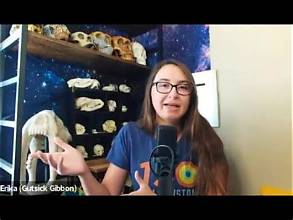
Erika, of Gutsick Gibbon has a wonderfully informative You Tube channel on everything Human and Primate Evolution (she knows her shit). A PhD candidate, she has over 200 videos, many of which are takedowns of mostly Christian inspired anti-evolution nonsense.
I refer to her for the latest in PaleoAnthropology and Primatology. She is an excellent speaker and is very thorough in her treatment of any topic she covers.
I do disagree with her on whether we are just rare, or actually special. I sent her all the info in this post, and she’s not buying, still thinks we mat be rare, but not special. See for yourself in what follows-
I do think that we are categorically special: Absolutely different than all the other animals. Not “ordained by god to have dominion over them” or any other such Bronze Age Abrahamic bullshit, but actually, conceptually special, to be precise. Our hands, brains, and in particular the cognitive abilities our hand-brain evolution engendered are not at all like the other animals interactions or perception of the environment.
Erika really covered the anatomical and behavioral similarities we share with primates and mammals that make us similar, maybe not special, only rare, but didn’t cover the Neurological and Cognitive differences, that I will make the case here give us a qualitatively different cognition that underlies all our unique behaviors and accomplishments: language, culture, unlimited technology, and theoretical science.
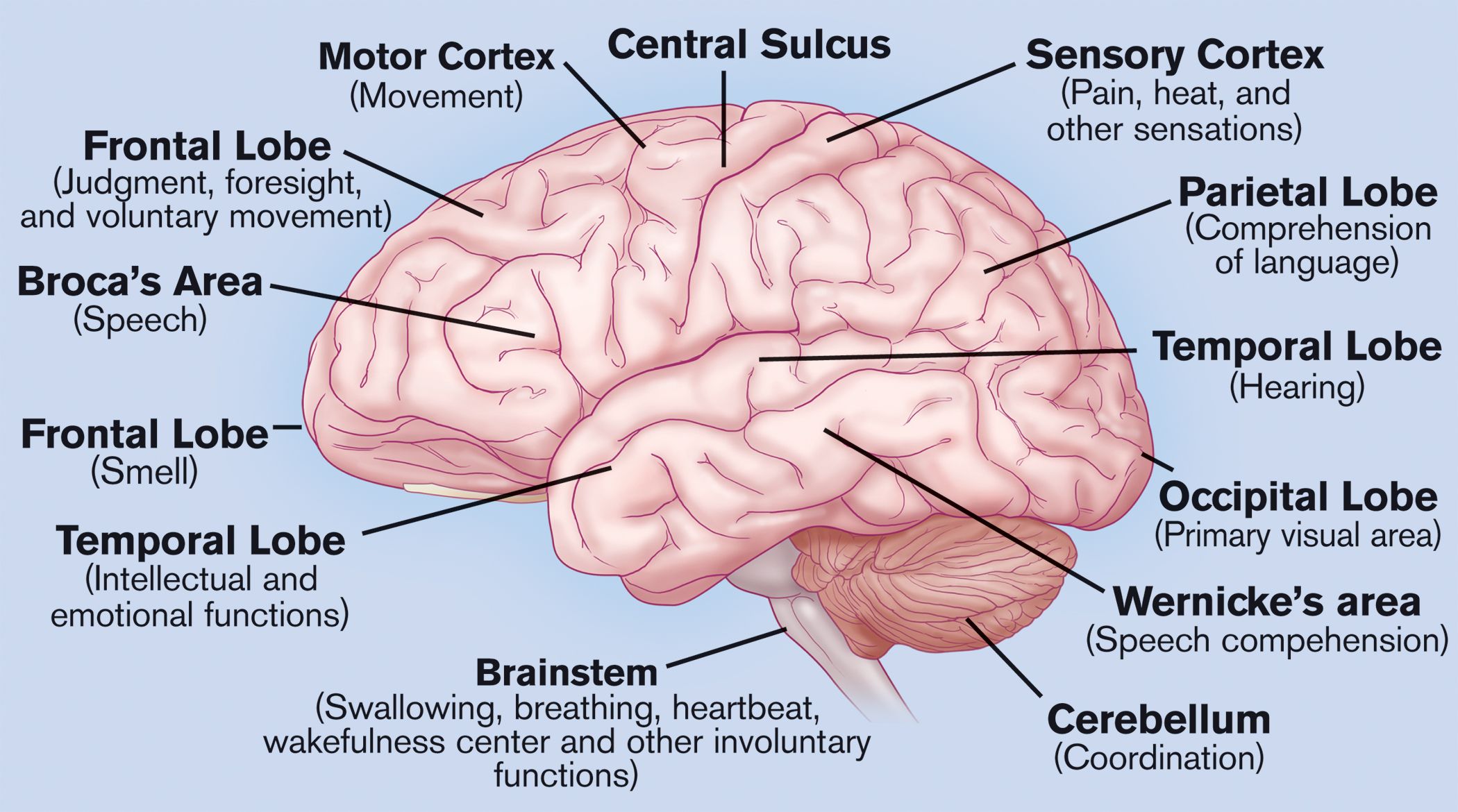
If you read the work of folks like Todd Preuss and other neuroscientists, or the theorist Jeff Hawkins, even though we do have the basic structure of an off-the-rack mammal and primate brain, our evolution produced a unique brain “rewired and running hot” (as Todd Preuss describes it) with connections, neurons, expanded and new functional areas, and expressed genes that even our closest primate relatives do not share. It may also be that our additional thousands of cortical columns gave us the power of conceptual thought, wholly unlike all the other animals.
Animals have categories, based on perceptual similarity. They do not appear to have the abstract, relational, or spatial and force concepts that human children develop in the first year. This more than anything is a result of our uniquely wired and expanded (especially in the cortex) brain, and what gives us the ability to manufacture (not merely use) an unlimited (not just one or a few) set of tools and theorize using abstract concepts. Yes, we have the same or similar neurons and neurotransmitters in that primate brain, but our conceptual abilities are what make us unique and give us language, culture, and science. The work of Jean Mandler, Susan Carey, Allison Gopnik, and others demonstrate how completely different even a toddlers cognition is as compared to any other animal.
Animal tool use, most often limited to one tool for food procurement is nothing like unlimited human 2- handed competence tool manufacture. Human toolmaking is in no way merely an extension of chimp nut cracking or termite fishing. Our hand-brain connections and our understanding of spatial and force concepts allow us not only to make almost any tool we can dream up (as exemplified by our exponentially growing modern technology and energy capture) but to know how and why any tool will work ahead of time, and engineer it to specs. Let’s ask your dog to try that.
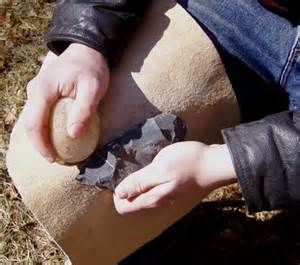
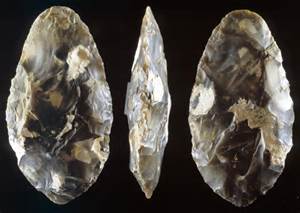
Additionally, no chimp (or any animal) can spend 30-40 minutes in dedicated attention, employing at least 4 different types of strikes using a hammerstone in one hand (the right one) orienting the tool core in space with the left, employing spatial and force concepts of equality, contiguity, L/R distinction, and rules like “flakes follow ridges” to fashion the nearly million-year-old Late Acheulian handaxes, intentionally producing bilateral symmetry in plan and profile. Only humans can impose such concepts onto virtually any substrate.
And no animal practices: set goals, self monitors progress, achieves increasing levels of skill, be it a craft like knitting or carpentry, music, academic success, engineering, cooking, video gaming – you name it. This is not rare. Animals play at genetically wired behavior routines – such as neck-biting prey capture and kill and the like. We didnt evolve to play chess or master calculus – its not instinct, but our cognition and conscious awareness allows us to imagine, create, and master wholly unprecedented expertise. This is special. Add art to that list, and literature, and all the dramatic arts. Chimps don’t dance either. They make odd anxious movements in response to fire, but do not produce rhythmic behaviors following a specific beat and spatial pattern. We do music and dance. That aint just rare either – AS IF any others of the millions of species that are alive today, or have ever lived, can do any of these things too… Just sayin’.
Chimpanzees never “get it”. They demonstrate no understanding of concepts such as contact, containment, support, or solidity, for example, that human children grasp within the first few years. A two-year old leaves a chimpanzee of any age cognitively in the dust. The work of Daniel Povinelli, Elsabeth Visalberghi and others have demonstrated that even our closest living genetic relatives have no ability to understand and employ “unobservable concepts”, such as those mentioned above and other spatial and force concepts such as weight, or propulsion. These abstract concepts, as I said, begin to develop in the first year of a child’s life. This is a wholly different kinda cognition we have evolved here on earth – unlike any other critter’s. Its not rare, like a few others have something of it – a cognition like it…we have a qualitatively different conceptual cognition than any other animal that despite much of our brains and behavior mediated by many of the same functional areas as other mammals and primates, we have areas that run language (not animal call systems), metaphor, spatial processing, mathematical reasoning, object and process recognition, episodic memory – that no other animal has. Special, not merely rare.
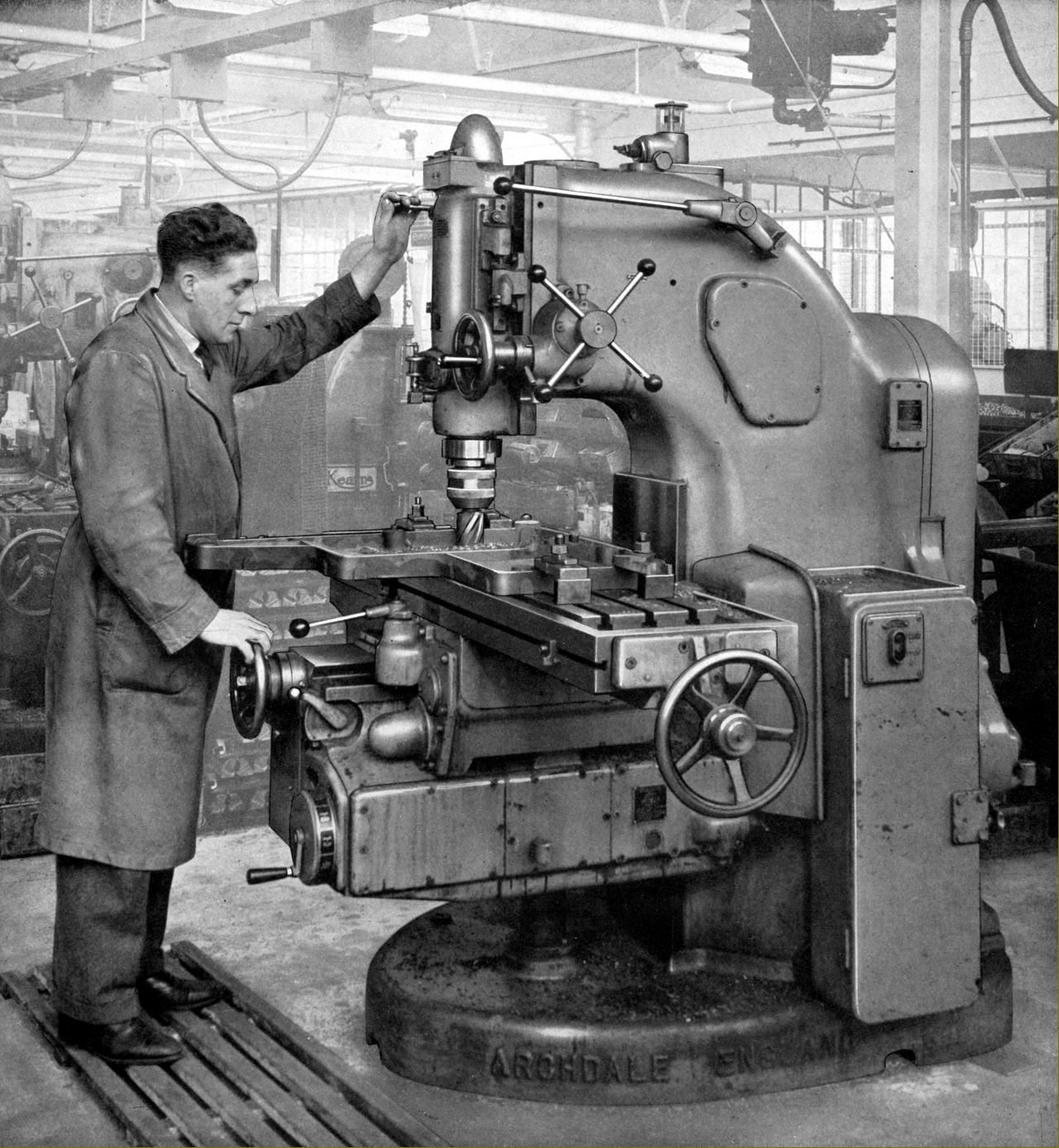
And because of our conceptual abilities that drive theoretical science, we make tools that make other tools, formulate wholly artificial substrates of metals and plastics, and make the largest “tool” ever devised: the LHC – Large Hadron Collider – built solely to suss out the ultimate particles and energies that make up our world. All human tool manufacture as exemplified by the LHC and space telescopes, lunar landers, etc., are categorically different from any instance of simple, singular, animal tool use. Our ability to make such things is not a mere categorical extension of chimps fishing for termites with a modified stick, or birds dropping shellfish onto rock or concrete.
What we do is special, unique, unprecedented, not in the least just more of any animal’s behavior or abilities: and all because of our uniquely evolved hand, and the hand-brain connections which construct the conceptual abilities every human child and no animal ever develops in the first few years of life.
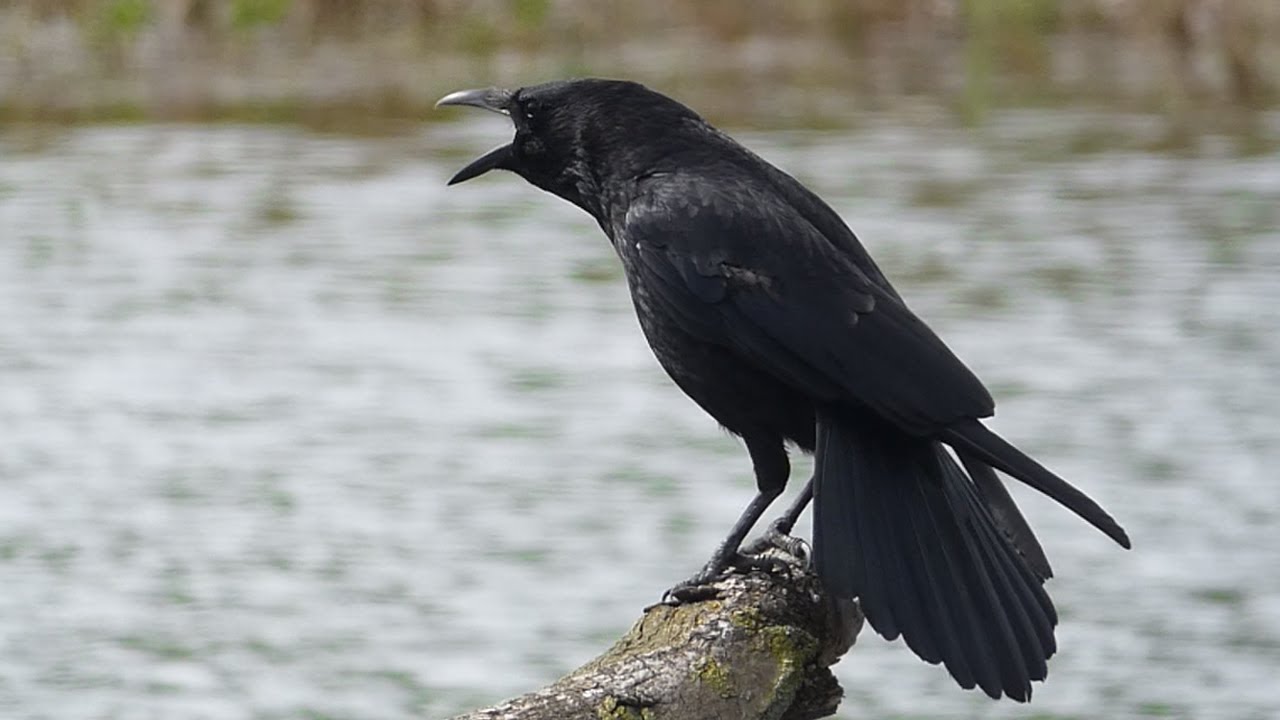
Human language is also unique and not merely an elaboration of any animal call system (ACS). Animal calls do not map onto concepts as do human words. They engender mostly automatic behavioral responses and carry minimal information. They are not combinatory to any extent as are human words, phrases, modifiers, sentences, whole paragraphs of ideas are. Recursion is not the only unique feature of human language. The mapping onto concepts and facilitation of not only memory but new concepts through language use are also features not in any animal call system. In addition to these attributes, and recursion, human language describes displacement in space and time. Animal calls do not, precisely because they have no such concepts such as space and time to communicate, as far any evidence shows.
Once we evolved into the “cognitive niche”, expanding from simple extractive foraging, scavenging, and hunting, we became dedicated problem-solvers: able to move into any new environment and devise shelter, make appropriate clothing, tools for food procurement, plant crops, and capture energy to a nearly unlimited extent. Nuclear power, anyone? No chimp however clever or “enculturated” into a human-like life, will ever make you a hamburger or build you a skyscraper.

Girl playing scientist in lab
Beyond that, and most important for our unprecedented theoretical scientific understanding, we have a unique, seemingly unlimited motivation wired into our psyches now to figure out how the world works, well beyond the level necessary for mere survival. Why describe gravity? Why investigate atomic structure? Why build an LHC, plan a moon base, map a genome? These activities are not merely rare here on earth, they are completely off the scale of animal interest and cognition. We have a uniquely evolved thirst for understanding that is not just an extrapolation of feline curiosity or the new food source exploratory behaviors of many rodents.
Every human child slowly builds a conceptual model in their daily consciousness of an external world populated with people, objects, and events, with them moving through it in space and time – their ever-developing self-identity. Your dog doesn’t know that he is Rex, son of Rusty, that he had his distemper shots when he was 2, what a Tuesday is, nor that he lives in the U.S. in the Northern Hemisphere of the third rock from the Sun, in one arm of the Milky Way galaxy, one of billions in the Observable Universe. By your grade-schooler knows all of this in the 21st Century. Such ever-expanding general knowledge, and self-knowledge, driven by conceptual ability is not merely an extrapolation of the sentience, perceptions, instincts, and impressive but limited to their own domain, problem-solving abilities of mammals and primates.
So, neurologically, cognitively, linguistically, and psychologically we are not like the others. We are not merely rare. No animal has any of the attributes I delineated above in these four domains that put us in our own category. Other critters may have big noses like ours, feel pain, locomote bipedally, have complex social interactions, have successfully populated large parts of the planet, and communicate some minimal information, but they do not have our concepts or our motivations to discover how the world works – and then share everything we know with everyone else in our species – and nowadays at lightspeed in the palm of our hand (smartphones, anyone?) They don’t have our hands, or our brains, or our cognition. Nothing close to it. We are not just rare, but utterly special.
For some further explication of this approach to Cognitive Evolution from a Developmental and Cognitive Psych/ Cognitive Development perspective, check out some of the other articles on this website that I plan to compile into a book on the subject in the not-too -distant future, working title:
“The Human Journey – Tools, Concepts, and Consciousness”.
Toys aren’t Us and Neither are Animals -http://wearedone.org/?p=7844
Father’s Day Musings on Cognitive Evolution – http://wearedone.org/?p=7797
Enjoy.
(13)
